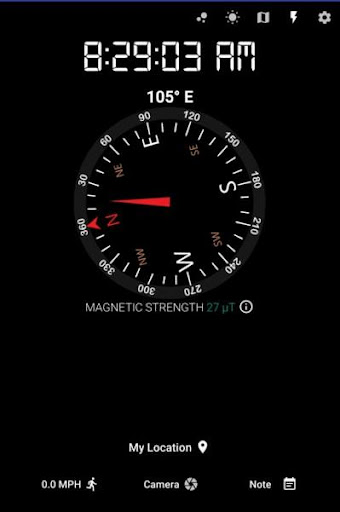
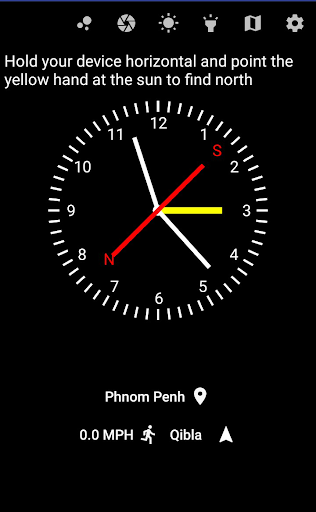
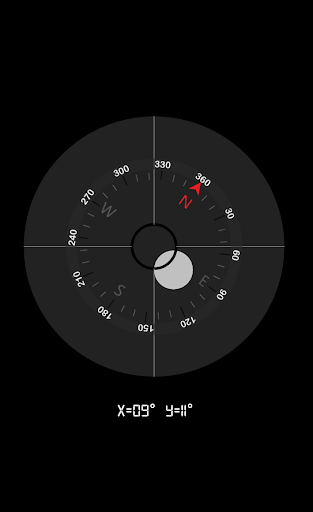
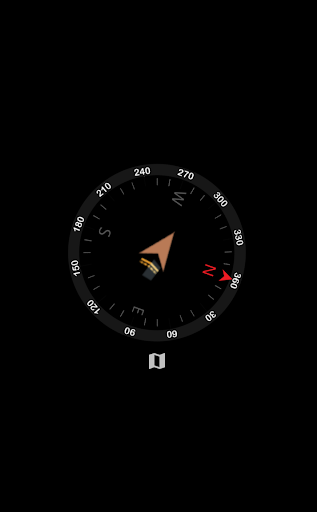
1. Easy Navigation: Compass apps offer a straightforward and intuitive interface that provides users with cardinal direction and orientation, making it simpler to navigate unfamiliar areas without needing a full-fledged map or GPS service.
2. Offline Functionality: Most compass applications can function without an internet connection, relying on the device's built-in magnetometer, which is especially useful in remote locations where cellular service is unavailable.
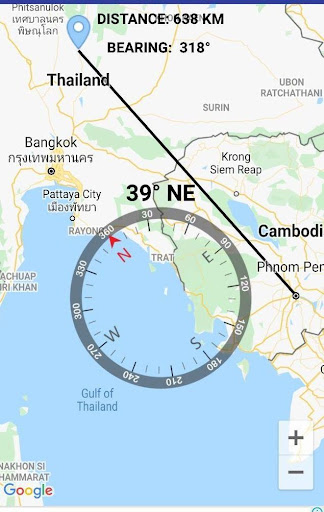
3. Integration with Other Apps: Compass apps are often integrated with mapping and outdoor adventure applications, enhancing the user's experience by providing precise directional guidance in conjunction with location data and points of interest.
1. Limited Coverage: Compass may not provide accurate navigational data in remote or less developed areas, making it less reliable for users traveling outside of well-covered zones.
2. Battery Consumption: Running GPS and data-intensive applications like Compass can drain a smartphone's battery quickly, potentially leaving users without navigation when it's most needed.
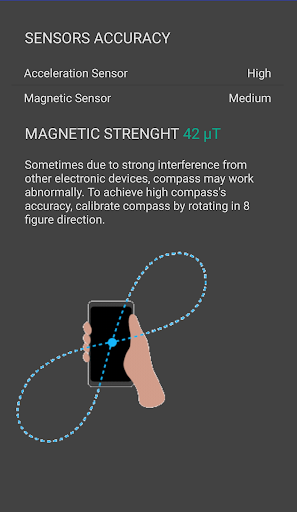
3. Accuracy Dependence: Compass's accuracy is tied to the phone's hardware and magnetic sensor quality. This can lead to errors in direction-finding if the device's compass isn't calibrated properly or is affected by surrounding magnetic fields.