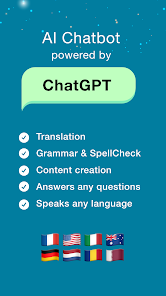
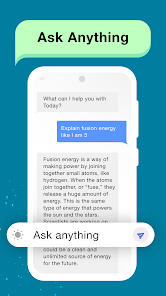
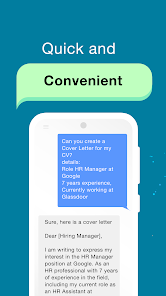
1) Always-on, instant support: The app delivers immediate, 24/7 responses to user queries, reducing wait times and freeing human agents for complex issues. It handles high volumes of routine questions, triages problems, and ensures consistent service across time zones, improving customer satisfaction and operational efficiency.
2) Personalized, context-aware assistance: The chatbot learns user preferences and conversation history to provide more relevant answers, recommendations, and follow-ups. By adapting tone and content, it creates smoother interactions, speeds problem resolution, and increases engagement through tailored suggestions, while offering controls to protect sensitive data and privacy.
3) Boosts productivity and automates workflows: The assistant handles repetitive tasks—drafting messages, scheduling, summarizing, extracting data—saving time and reducing errors. Integrations with apps and APIs enable seamless handoffs, allowing teams to focus on strategic work, shorten response cycles, and scale knowledge work without proportional increases in staffing.
1. Privacy and data security: AI chatbots often log conversations and may collect personally identifiable information without explicit consent. Weak data handling, unclear retention policies, third-party access, or inadequate encryption can expose sensitive user data, raise legal and ethical concerns, and breach user trust for individuals and organizations.
2. Inaccuracy and bias: AI chatbots can produce incorrect, incomplete, or fabricated responses (hallucinations). Trained on biased or low-quality data, they may reflect stereotypes, misinformation, or harmful recommendations. Users must verify outputs, especially in high-stakes fields like medicine, law, or finance, to avoid poor decisions and safety or legal consequences.
3. Over-reliance and job impact: Dependence on AI chatbots can erode critical thinking and communication skills, encourage automation complacency, and contribute to workforce displacement in support, content, and administrative roles. Limited contextual understanding and lack of accountability mean AI cannot fully replace human judgment in complex, ambiguous, or ethical decisions.